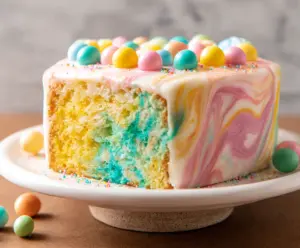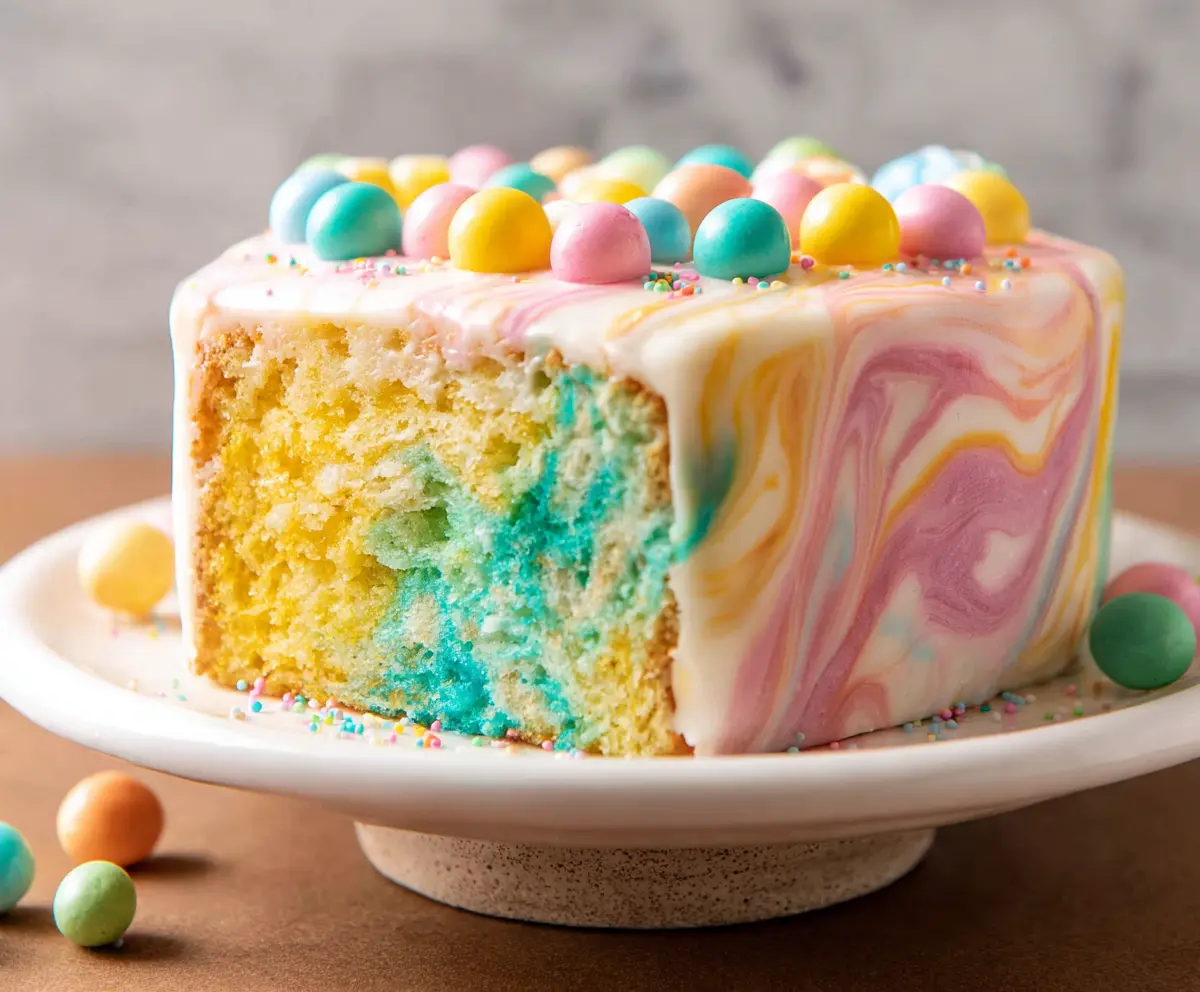
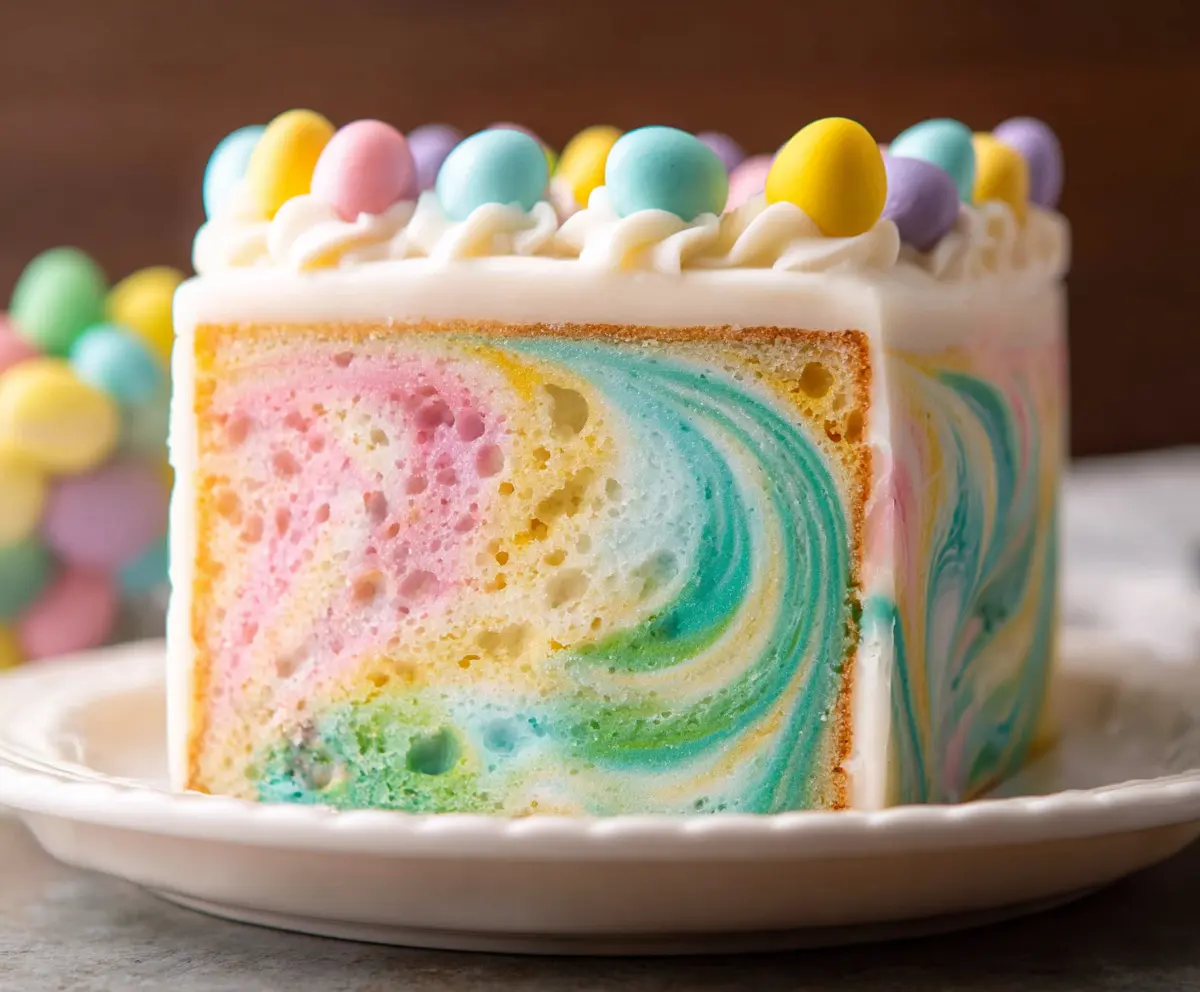
This festive swirled Easter cake is a treat for the eyes and the taste buds! With colorful layers and a soft, fluffy texture, it’s perfect for celebrating spring.
Making this cake is a fun project—just mix up your favorite colors and watch them blend beautifully. I love serving it with a scoop of ice cream on the side for an extra special touch! 🍰
Key Ingredients & Substitutions
All-Purpose Flour: This is the base of your cake, giving it structure. If you’re gluten-free, you can swap it with a gluten-free flour blend, but check if it has xanthan gum for better results.
Unsalted Butter: Using unsalted butter gives you control over the saltiness of the cake. If you’re in a pinch, you can use margarine or coconut oil, but the texture might vary slightly.
Sugar: Granulated sugar is common in this recipe, but you can substitute with coconut sugar or brown sugar. Just remember, this might slightly change the flavor and color of your cake.
Food Coloring: This recipe shines with bright pastels. If you’re looking for natural options, beet juice, turmeric, or spirulina can give you colors without artificial dyes.
Powdered Sugar: It’s mainly for icing. If you’re out, you can blend granulated sugar until fine to make your own! Just make sure it’s finely ground for a smooth icing.
How Do I Get A Beautiful Swirled Effect In My Cake?
The swirling technique is key to making your Easter Cake visually appealing. Here’s how to do it right:
- Divide and color the batter first, keeping it light and fluffy. This ensures that each layer remains distinct during swirling.
- When layering the batter in the pan, don’t be afraid to drop it from different heights. This creates variations in the height of the batter, leading to more defined swirls.
- Use a skewer or knife to gently swirl through the batter. Less is more! A few gentle swirls is often enough to create that marbled look without mixing all the colors together.
How to Make a Swirled Easter Cake
Ingredients You’ll Need:
For the Cake:
- 2 ½ cups all-purpose flour
- 2 ½ tsp baking powder
- ½ tsp salt
- 1 cup unsalted butter, room temperature
- 1 ¾ cups granulated sugar
- 4 large eggs
- 1 tbsp vanilla extract
- 1 cup whole milk
- Food coloring (blue, yellow, pink, or other pastel colors)
For the Icing:
- 4 cups powdered sugar
- 1/3 cup unsalted butter, softened
- 1 tsp vanilla extract
- 6-8 tbsp milk or heavy cream
For Decorations:
- Pastel-colored candy-coated chocolate or candy balls
- Multicolored round sprinkles
How Much Time Will You Need?
This delightful Swirled Easter Cake will take about 20 minutes to prepare, plus an additional 35-40 minutes for baking. Don’t forget to let it cool completely before icing, which takes about 30 minutes. Overall, set aside about 1.5 hours for this festive baking adventure!
Step-by-Step Instructions:
1. Preheat and Prepare the Pan:
First things first—let’s get that oven preheating! Set it to 350°F (175°C) and grease and flour a square cake pan or two round cake pans. This helps ensure the cake comes out easily once it’s baked.
2. Mix the Dry Ingredients:
In a medium bowl, whisk together your flour, baking powder, and salt. This mix is super important for making your cake rise nicely, so take your time and set it aside.
3. Cream the Butter and Sugar:
In a large bowl, use a hand mixer or stand mixer to beat the room temperature butter until it’s creamy and smooth. Then, gradually add the granulated sugar and mix until your mixture is light and fluffy—this should take about 3-4 minutes.
4. Add the Eggs and Vanilla:
Now it’s time to add the eggs—one at a time! Make sure to beat well after adding each egg. Once they’re all in, stir in the vanilla extract. Your batter is going to taste fabulous!
5. Combine the Mixtures:
Next, you’ll start mixing in the dry ingredients and milk. Alternate adding the flour mixture and the milk, starting and ending with the flour. Mix until it’s just combined—don’t overmix or your cake might turn out dense!
6. Color the Batter:
Divide your batter into separate bowls based on how many colors you want (3 to 4 colors work well!). Add a few drops of food coloring to each bowl and gently mix until the colors are nicely blended. This is where the fun really begins!
7. Create the Swirl Effect:
Now, spoon the colorful batters into your prepared pan(s) alternately. Layer the colors in different spots to create a beautiful marbled effect. Use a skewer or knife to gently swirl the colors together, but be careful not to mix them completely.
8. Bake the Cake:
Pop your cake in the oven and bake for 35-40 minutes. Keep an eye on it, and when a toothpick inserted in the center comes out clean, it’s ready! Remove it from the oven and let it cool completely on a wire rack.
9. Make the Icing:
While the cake cools, let’s make the icing! In a large bowl, beat the powdered sugar, softened butter, vanilla extract, and milk (add milk a little bit at a time) until it’s smooth and spreadable.
10. Ice the Cake:
Once the cake is completely cool, pour or spread the icing over the top, letting some drip down the sides for a lovely, flowing look.
11. Decorate!
Finally, decorate your beautiful cake with pastel-colored candy balls and multicolored sprinkles to add that perfect Easter touch.
12. Serve and Enjoy:
Your gorgeous Swirled Easter Cake is ready! Cut a slice, share it with family, and enjoy the fruits of your labor. Happy Easter!
Can I Use Different Types of Flour for This Cake?
Absolutely! While all-purpose flour works best for texture, you can use gluten-free flour blends if needed. Just ensure the blend contains xanthan gum for better structure, or add it separately if not included.
Can I Make the Cake Ahead of Time?
Yes! You can bake the cake up to a day in advance. Allow it to cool completely, then wrap it tightly in plastic wrap and store it at room temperature. Just frost it on the day you plan to serve it for the best texture!
How Should I Store Leftovers?
Store any leftover cake in an airtight container at room temperature for up to 3 days. If you’d like to keep it longer, you can refrigerate it for up to a week—just remember to let it come to room temperature before serving again!
What Can I Substitute for Milk in the Icing?
If you don’t have milk on hand, you can use heavy cream, almond milk, or even a non-dairy milk like coconut or oat milk. Just add a little at a time until you reach your desired icing consistency.