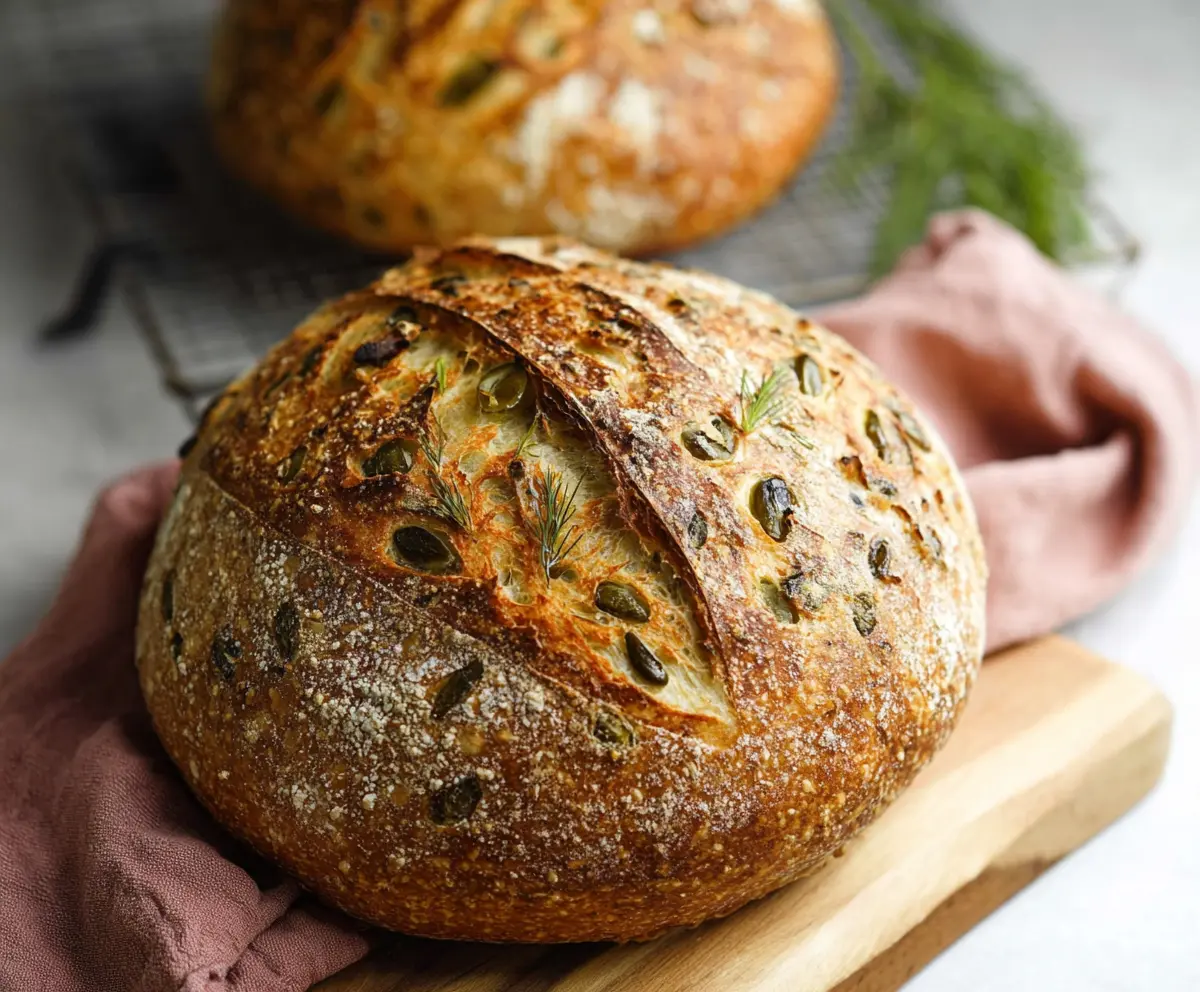
This Dill Pickle Sourdough Bread is a fun twist on traditional bread. With tangy dill pickles mixed in, it’s both tasty and unique. Perfect for sandwiches or just buttered up!
I can’t resist the smell of fresh bread baking. Spread a little cream cheese on a slice, and I’m in heaven! Who knew pickles could make bread so exciting? 😄
Key Ingredients & Substitutions
Bread Flour: This recipe calls for bread flour, which has a higher protein content for better gluten development. If you’re in a pinch, all-purpose flour works too, but the bread might be a little less chewy and rise less.
Dill Pickles: The heart of this bread! Use your favorite dill pickles for the best flavor. If you’re not a fan, try using pickled jalapeños or roasted red peppers for a twist.
Sourdough Starter: You need an active starter, so make sure it’s bubbly and fed. If you don’t have a starter, you can buy one or use a yeast-based bread recipe as an alternative, though it won’t have the same tangy flavor.
Fresh Dill: Fresh dill gives a bright flavor. You can also use dried dill, but fresh is best for that pop of taste. If you love herbs, try mixing in some chopped chives or parsley for extra color and flavor!
How Do I Get the Perfect Rise in My Sourdough?
The key to achieving a great rise lies in the fermentation process. Begin by allowing your dough to rest after mixing (30 min autolyse). Then, perform stretching and folding, which helps develop gluten that holds the dough’s shape and traps air. Here’s how:
- During each stretch and fold, gently pull the dough from one side, then fold it over itself. Rotate and repeat. Do this 3-4 times.
- Massaging in the pickles gently avoids breaking them, which helps maintain some of that crunch.
- Make sure the dough doubles in size during the bulk fermentation, and you’ll know it’s ready for shaping!
Lastly, don’t rush the final proof in the fridge. This slow fermentation enhances flavor and texture, giving you a beautiful loaf!
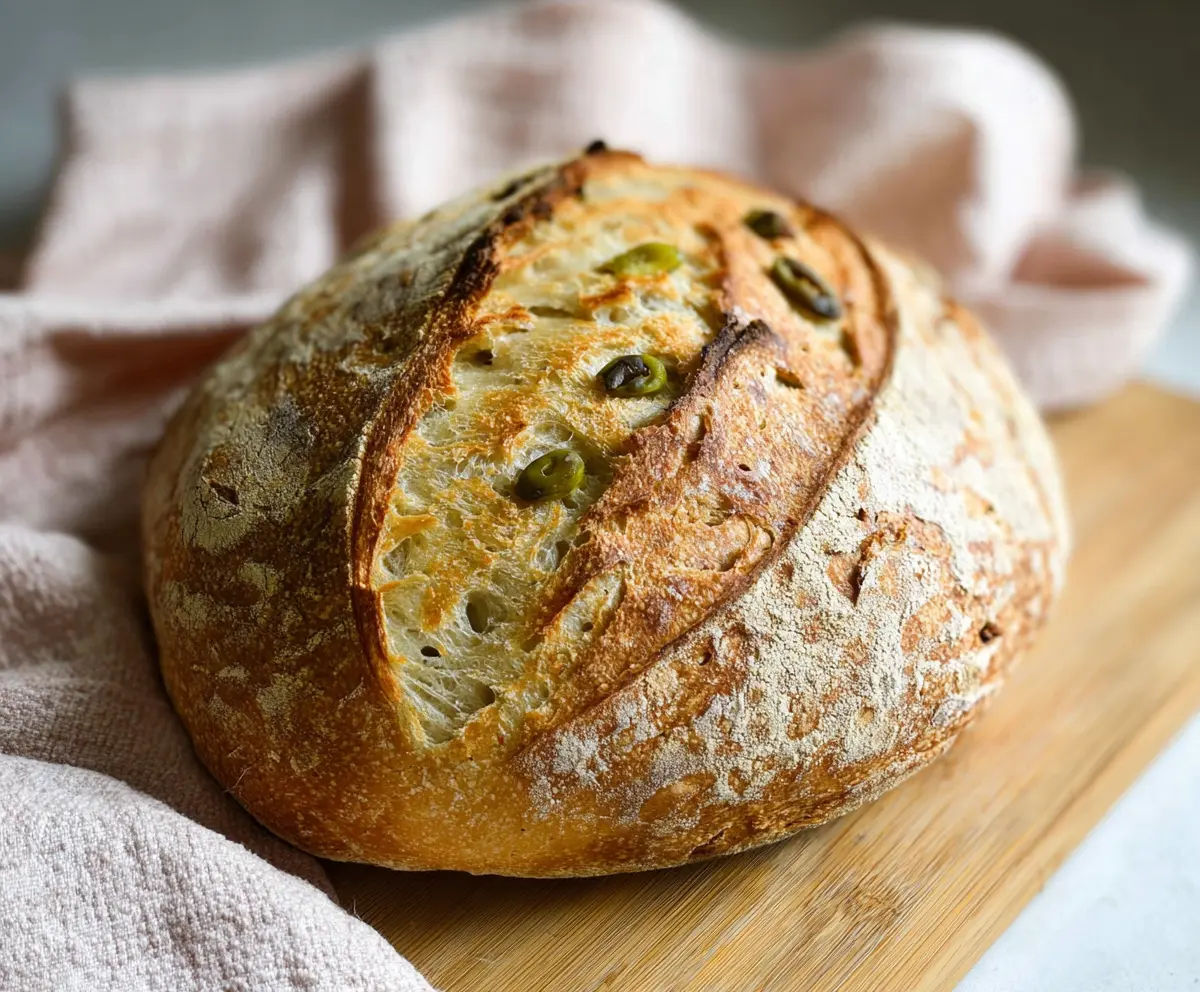
Flavorful Dill Pickle Sourdough Bread
Ingredients You’ll Need:
- 500 g (about 4 cups) bread flour
- 350 g (1 1/2 cups) water, room temperature
- 100 g (about 1/2 cup) active sourdough starter (100% hydration)
- 10 g (2 tsp) salt
- 1 cup diced dill pickles (well-drained and patted dry)
- 2 tbsp pickle brine (from the dill pickles)
- 1 tbsp fresh dill, chopped (plus some sprigs for garnish)
- Optional: 1 tsp caraway seeds or black pepper for extra flavor
How Much Time Will You Need?
This recipe requires about 30 minutes of active prep time, followed by 4-6 hours of bulk fermentation, and then an overnight cold proof of 12-18 hours. Baking will take approximately 45 minutes. Plan for at least 18-24 hours from start to finish—most of that time is hands-off!
Step-by-Step Instructions:
1. Mix the Dough:
In a large mixing bowl, combine the bread flour, water, and sourdough starter. Stir until you have a shaggy dough. Cover the bowl with a cloth or plastic wrap and let it rest for 30 minutes. This allows the flour to absorb the water, making it easier to knead.
2. Add Salt and Flavorings:
After the rest period, sprinkle the salt over your dough. Add the pickle brine, chopped dill, and optional spices if you’re using them. Use your hands to fold the dough over itself to mix everything together evenly.
3. First Rise and Incorporate Pickles:
For the next 3-4 hours, you will perform a series of stretch and folds every 30 to 45 minutes. Gently pull one side of the dough up and fold it over to the other side, rotating the bowl as you go. In the very first stretch and fold, carefully incorporate the diced dill pickles, being mindful not to smash them.
4. Bulk Fermentation:
After stretching and folding, let the dough rest at room temperature until it doubles in size and looks bubbly, approximately 4-6 hours depending on your kitchen temperature.
5. Shape the Dough:
Once the dough has risen, turn it out onto a lightly floured surface. Shape it into a round boule or an oval by pulling the edges into the center, then flip it seam side down and tighten it by gently pulling it towards you.
6. Final Proof:
Place the shaped dough seam side up in a floured banneton or a bowl lined with a floured kitchen towel. Cover it and refrigerate for 12-18 hours. This slow proofing process develops flavor and texture.
7. Preheat Oven:
About 45 minutes before you plan to bake, preheat your oven to 475°F (245°C) with a Dutch oven or baking stone inside. This ensures it’s hot enough to create a nice crust.
8. Bake:
When you’re ready to bake, carefully take the dough from the fridge. Turn it out onto a piece of parchment paper and score the top with a sharp blade, making a shallow cut (this helps the bread expand in the oven).
9. Finish Baking:
Place the dough with the parchment in the hot Dutch oven, cover with the lid, and bake for 20 minutes. After this initial time, remove the lid and bake for an additional 20-25 minutes until the crust is a deep golden brown and crispy.
10. Cool:
Once finished baking, let the bread cool on a wire rack for at least one hour before slicing. This cooling time helps set the crumb texture.
11. Serve:
Garnish with fresh dill sprigs if you like! Enjoy this unique, tangy, and flavorful bread with butter, cream cheese, or your favorite sandwich fillings. The crispy crust and soft interior make it a delightful addition to any meal!
Whether enjoyed on its own or as the base for a delicious sandwich, this Dill Pickle Sourdough Bread is sure to impress with its unique flavor and charming aroma. Happy baking!
Can I Use Store-Bought Pickles Instead of Homemade?
Absolutely! Store-bought dill pickles work perfectly in this recipe. Just make sure to drain them well and pat them dry to avoid excess moisture in your dough.
What If My Dough Isn’t Rising?
If your dough isn’t rising, it may be due to a few factors: your sourdough starter might not be active enough, or the ambient temperature could be too cold. Ensure your starter is bubbly and fed right before using, and try to keep the dough in a warm spot while it ferments.
Can I Freeze Leftover Bread?
Yes, you can freeze the bread! Once it has completely cooled, wrap it tightly in plastic wrap and then in aluminum foil or a freezer bag. It can be frozen for up to 3 months. When ready to eat, thaw at room temperature or pop it in the toaster for a quick reheat!
How Can I Adjust the Recipe for Gluten-Free Bread?
If you’re looking to make this gluten-free, you’d need to use a gluten-free bread flour blend and adjust the liquid slightly as gluten-free flours absorb more liquid. You may also need to add a binding agent like xanthan gum to help with the structure.