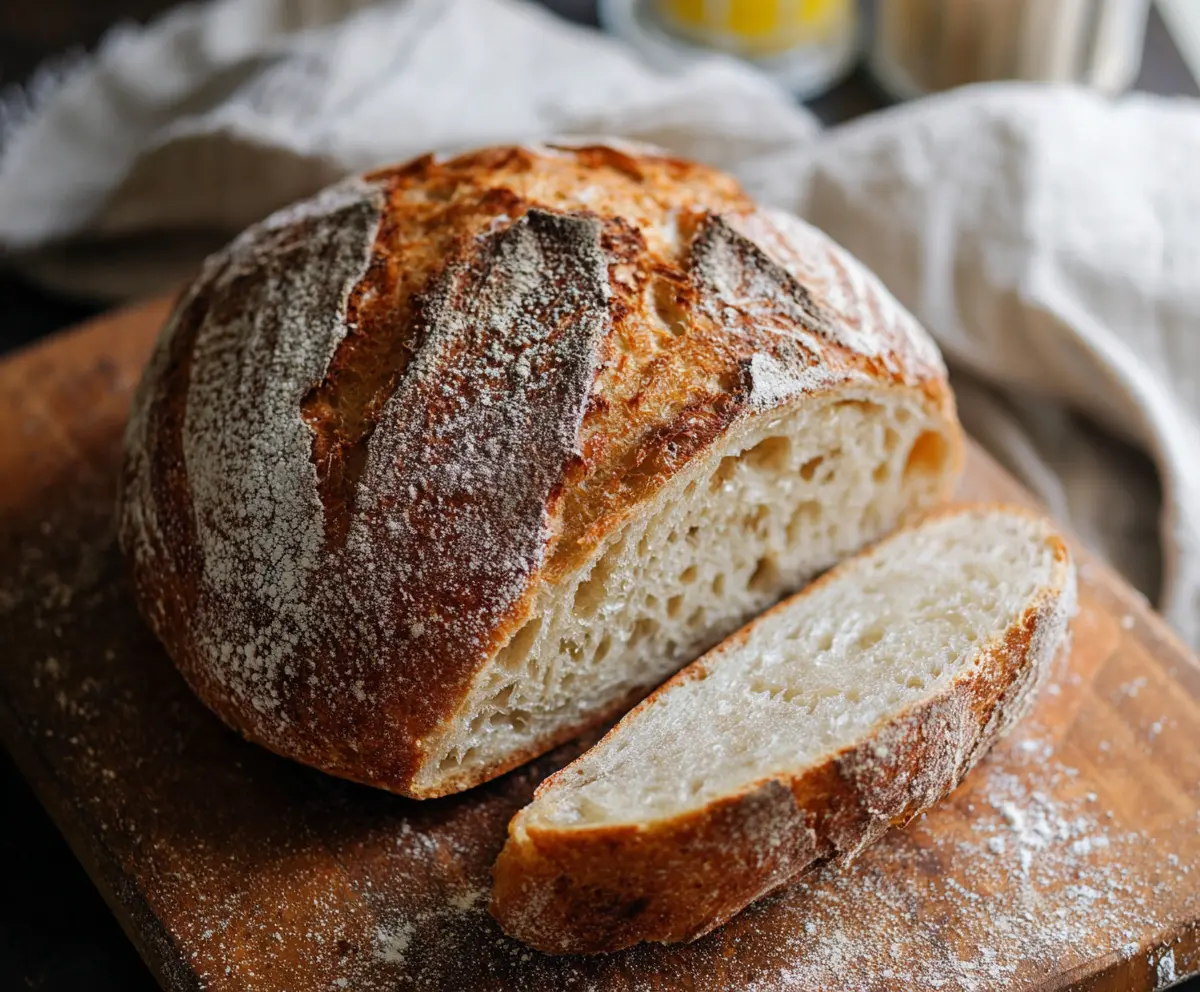
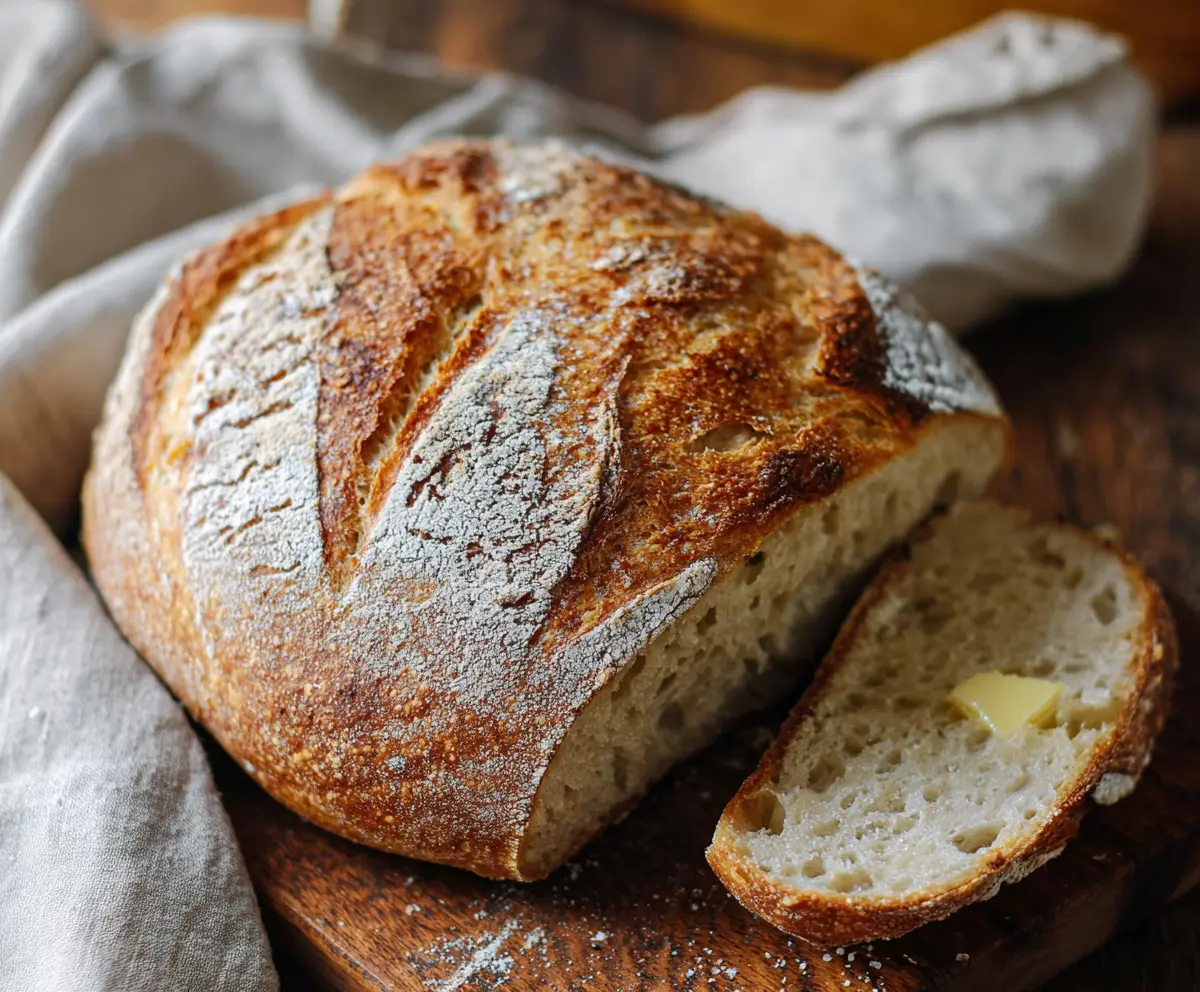
This Artisan Sourdough Bread has a lovely crust and a soft, chewy inside. With just flour, water, salt, and a bit of sourdough starter, it’s a simple pleasure to bake!
There’s something magical about the smell of fresh bread filling the kitchen. I love slathering it with butter right out of the oven, and trust me, you’ll want to do the same!
Key Ingredients & Substitutions
Bread Flour: This gives the bread structure and chewiness. If you can’t find it, you can mix all-purpose flour with a bit of vital wheat gluten to mimic bread flour’s protein content.
Sourdough Starter: A bubbly and active starter is essential. If you’re new to sourdough, you can buy a starter from a bakery or online. In a pinch, a commercial yeast can work, but the flavor will differ.
Salt: While I use kosher salt, you can substitute sea salt or table salt. Just keep in mind that table salt can be more potent, so use a little less.
Water: Make sure it’s at room temperature. Cold water can slow down fermentation. If you prefer, you can use filtered water to keep it cleaner and fresher.
How Do I Create a Strong Gluten Structure with Stretch and Folds?
The stretch and fold technique is key for building gluten without kneading. It helps create a light airy bread. Make sure to wet your hands to prevent sticking and be gentle to keep the bubbles you’ve formed in the dough intact.
- After your initial resting (autolyse), wet your hand and grab a portion of the dough.
- Lift it up gently and stretch it without tearing, then fold it over the rest of the dough.
- Rotate the bowl 90 degrees and repeat 3-4 times.
- Perform this every 30 minutes for the first 2 hours of the bulk fermentation. It’s a game changer for your bread!
How to Make Artisan Sourdough Bread
Ingredients You’ll Need:
For the Bread:
- 500g (4 cups) bread flour
- 350g (1 1/2 cups) water, at room temperature
- 100g (about 1/2 cup) active sourdough starter (fed and bubbly)
- 10g (2 tsp) salt
- Additional flour for dusting
How Much Time Will You Need?
This sourdough bread recipe takes about 30 minutes of hands-on preparation time, plus about 4 to 6 hours for fermentation and an additional 30 minutes to bake. If you choose to proof it overnight in the refrigerator, just plan for an extra day of waiting! Overall, you’ll spend some quality time with your dough and enjoy the lovely smells of baking bread later on.
Step-by-Step Instructions:
1. Mixing the Dough:
In a large mixing bowl, combine the bread flour and warm water. Stir together until a shaggy dough forms—don’t worry if it’s a bit messy! Cover the bowl with a damp cloth and let it rest for 30 minutes. This resting phase, called the autolyse, helps the flour absorb the water and starts developing the gluten.
2. Adding Starter and Salt:
After the dough has rested, add your bubbly sourdough starter and salt. Mix thoroughly until everything is well combined. You want the salt and starter evenly distributed throughout the dough for proper fermentation.
3. Bulk Fermentation:
Cover the bowl again and let the dough ferment at room temperature for 4 to 6 hours. During the first 2 hours, perform stretch and folds every 30 minutes. To do this, wet your hand, grab one side of the dough, stretch it upwards gently, and fold it over to the center. Turn the bowl a quarter turn and repeat 3 to 4 more times. This helps build gluten structure without kneading!
4. Shaping the Dough:
Once the fermentation time has passed, gently turn the dough out onto a lightly floured surface. To shape it into a tight round loaf, fold the edges into the center and then flip it seam-side down. Using your hands, create surface tension by gently pulling the dough towards you on the work surface. This will help the bread hold its shape.
5. Proofing the Dough:
Place the shaped dough into a floured banneton or a bowl lined with a well-floured kitchen towel. Cover it and let it proof for 2 to 4 hours at room temperature. If you want to make it ahead of time, you can also place it in the refrigerator overnight for a slow proof, which enhances the flavor!
6. Preheating the Oven:
About 30 minutes before you’re ready to bake, preheat your oven to 230°C (450°F). If using a Dutch oven or heavy pot, place it with its lid inside the oven to heat up. This creates a steamy environment when you bake, giving that lovely crust!
7. Scoring and Baking:
Carefully transfer the dough onto a sheet of parchment paper or a hot baking sheet. With a sharp knife or bread lame, score the top of the loaf with 2-3 slashes. This allows the bread to expand while baking. Remove the hot Dutch oven from the oven, place the dough inside with the parchment, cover it with the lid, and bake for 20 minutes.
8. Finishing the Bake:
After 20 minutes, remove the lid and bake for an additional 20-25 minutes, or until the crust is a deep golden brown and crispy. The aroma will be wonderful, and you’ll know it’s almost time to enjoy!
9. Cooling Down:
Once baked, take the bread out of the oven and place it on a wire rack. Let it cool completely for at least 1 hour before slicing. This cooling period allows the inside to set and improves the texture for that perfect bite!
Enjoy your homemade crusty artisan sourdough bread with its airy crumb and rich flavor. Perfect for sandwiches, toast, or just enjoying with butter!
Can I Use All-Purpose Flour Instead of Bread Flour?
Yes, you can use all-purpose flour, but the texture and structure of the bread may vary. If you want to mimic bread flour, you can add a bit of vital wheat gluten to boost the protein content.
What Should I Do If My Dough Isn’t Rising?
If your dough isn’t rising, it could be that your starter isn’t active enough or the environment is too cold. Make sure your sourdough starter is bubbly and fed before use, and consider placing your dough in a warmer spot or using a proofing box to help encourage fermentation.
How Can I Store Leftover Sourdough Bread?
Store any leftover bread in a paper bag at room temperature for up to 2 days. For longer storage, wrap it in plastic wrap and freeze for up to 3 months. To revive frozen bread, simply thaw at room temperature and reheat in the oven for a few minutes.
Can I Adjust the Amount of Starter Used?
You can adjust the amount of starter based on how tangy you want your bread. Using more starter will create a more sour flavor, while using less will give you a milder taste. Just be careful to adjust the hydration by reducing the same amount of water to keep the consistency right!